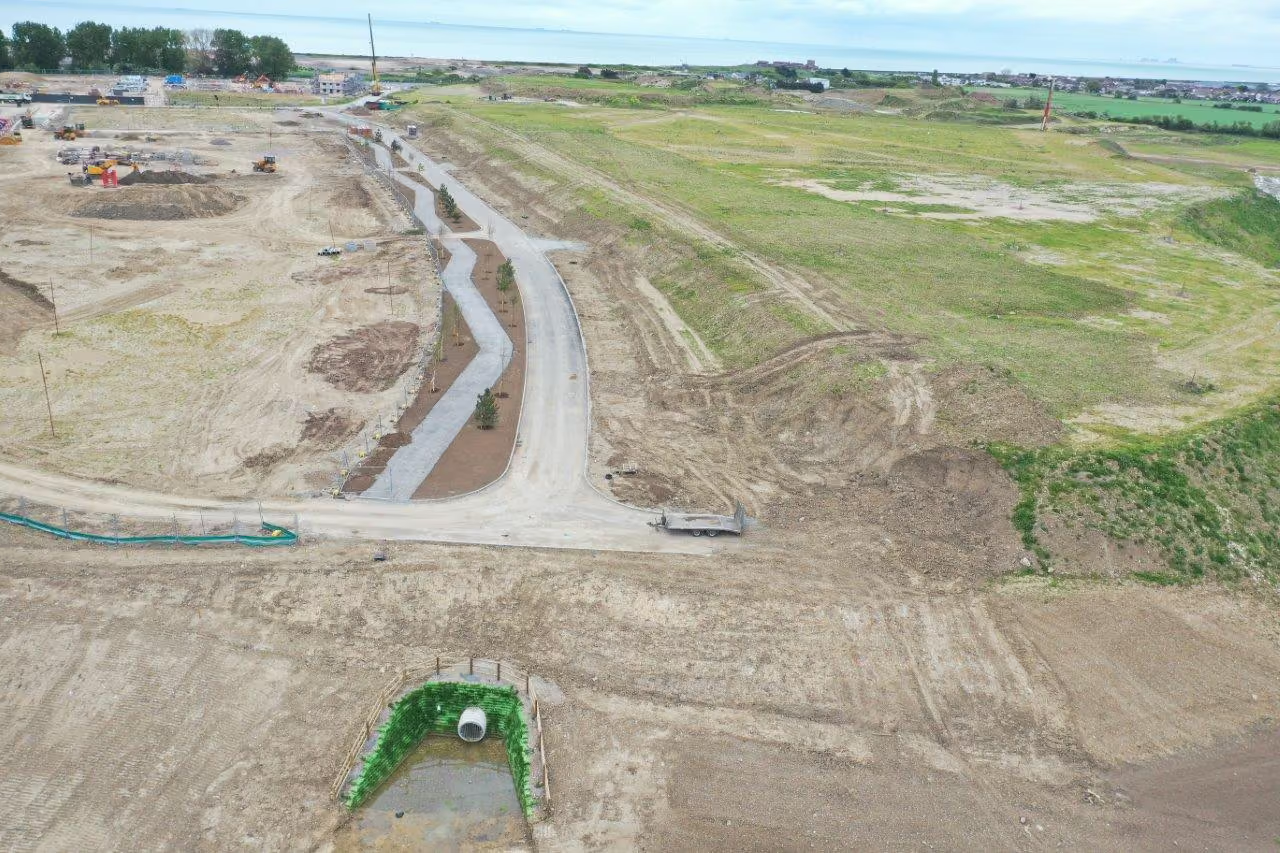
Quarry & Brownfield Remediation Joint Ventures.
Camland Group specialises in unlocking complex quarry and brownfield sites through structured joint venture and development agreement models that accelerate remediation and bring land forward for development.
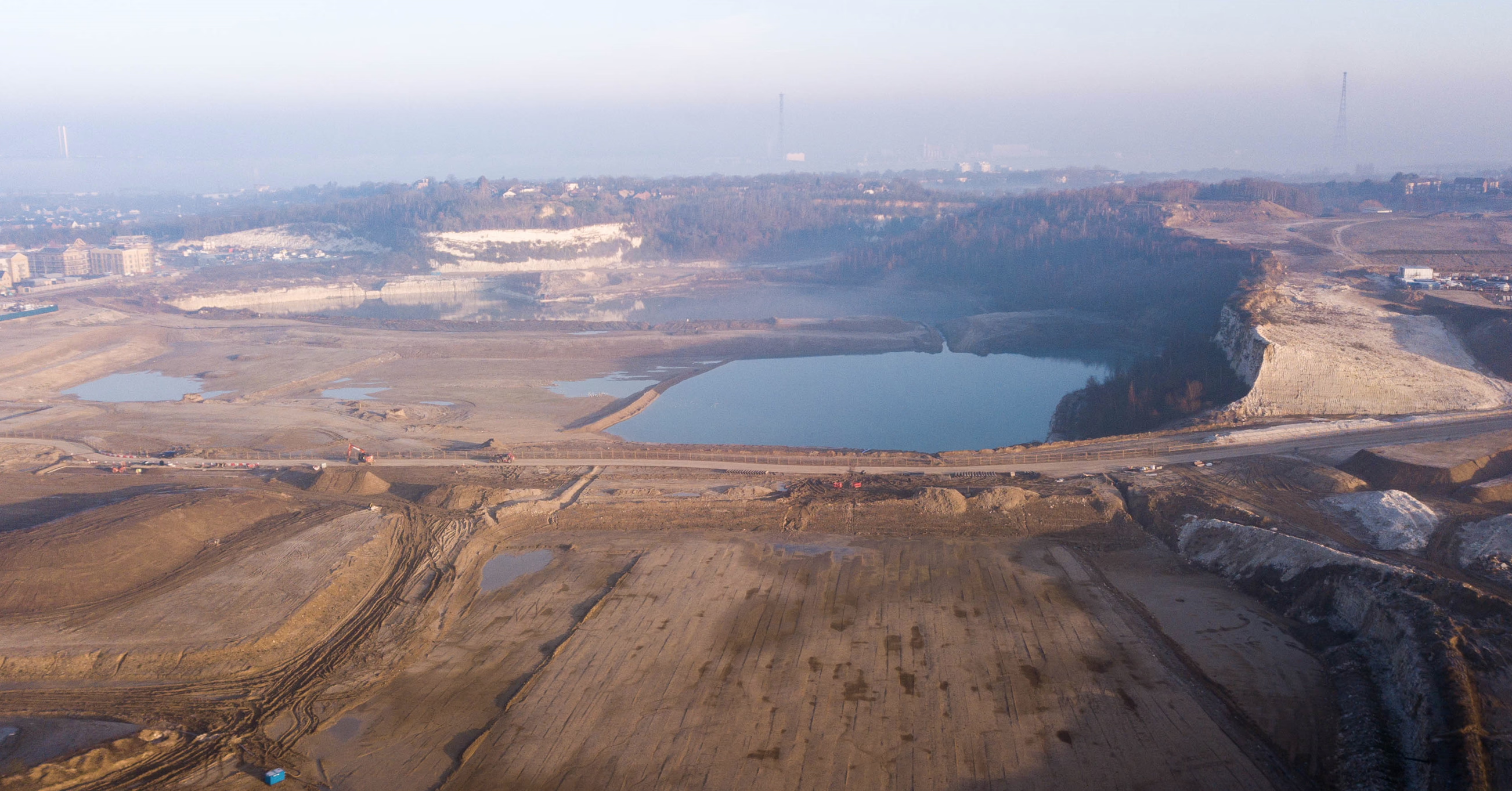
Introduction Quarry & Brownfield Remediation Joint Ventures
Quarry and brownfield sites often carry significant abnormal costs and delivery risk, which can delay or suppress value. Our approach is designed to overcome those constraints by aligning landowners, funders and housebuilders around a shared delivery strategy.
Development Agreements That Unlock Value
Rather than relying on a traditional land sale, Camland typically enters into a development agreement or joint venture, enabling all parties to participate in future value creation.
Under this structure, Camland shares in development revenues generated through housebuilding sales. This forward-looking income stream can be borrowed against, allowing early-stage capital to be deployed efficiently.
The result is a funding mechanism that enables remediation and enabling works to be forward funded, rather than waiting for value crystallisation at plot sales or land disposal.
Forward Funding Remediation & Enabling Works
Camland uses its development expertise and balance sheet strength to fund and deliver:
- Quarry remediation and restoration
- Brownfield land remediation
- Earthworks and ground stabilisation
- Strategic enabling infrastructure
By funding these works upfront, we materially de-risk sites, shorten programmes, and create development-ready land capable of immediate housebuilder deployment.
Early Housebuilder Alignment
Housebuilders are brought into the structure early, committing a defined share of future sales into the development agreement.
This provides housebuilders with:
- Reduced upfront land risk
- Access to fully remediated, serviced land
- Clear delivery and handover milestones
- Certainty around programmes
- Technical sign-off to include NHBC compliance
- The ability to discharge the relevant planning conditions
Camland prepares and remediates the land before handing it over signed off as ready for development, allowing housebuilders to focus on build quality, sales and delivery pace.
A Model Built on Alignment
Our quarry and brownfield joint venture model aligns incentives across all stakeholders:
- Landowners retain exposure to long-term upside
- Housebuilders avoid early-stage remediation risk
- Capital is deployed earlier and more efficiently
- Challenging sites are brought forward faster
This approach is particularly effective where abnormal costs would otherwise constrain viability or delay delivery.
Unlocking Complex Sites
Camland has a proven track record in managing technically complex development projects. Our quarry and brownfield remediation joint ventures reflect our core belief that the right structure can unlock land that would otherwise remain stalled.








Further Reading